
On the same 24,995 ChatGPT prompts, answers grew from an average of 376 words before GPT-6 (October 1 to 5, 2026) to 534 words after it (October 11 to 13), about 40% longer. They also gained structure: 3.7 headings per answer instead of 2.3, and tables in 62% of answers instead of 49%. Brand mentions didn't follow. The share of unbranded answers mentioning the tracked brand moved by less than half a percentage point, and answers still mentioned about 1.8 brands each.
If you've asked ChatGPT anything since early October, you've probably noticed that the answers run longer and lean on headings and tables. OpenAI started rolling out GPT-6 in ChatGPT's Chat tab on October 7, 2026, for paid plans and on October 8 for Free and Go users. The obvious question for any brand is whether longer answers leave more room to be mentioned.
To find out, we compared ChatGPT answers to the same 24,995 prompts, tracked by 2,227 brands, before and after the rollout. This article covers the three changes we measured (length, structure, and brand mentions), what they mean for tracking your brand in ChatGPT, and how we ran the comparison.
- ChatGPT answers are about 40% longer after GPT-6. On the same prompts, the average answer went from 376 words to 534, and 84% of prompts got a longer answer.
- Answers are more structured. The average answer has 3.7 headings instead of 2.3, and 62% of answers contain a table, up from 49%.
- Brand mentions didn't grow with the answers. Answers still mention about 1.8 brands each, and the share of unbranded answers mentioning the tracked brand moved by less than half a percentage point.
- Compare the same prompts on both sides of October 7. Treat October 7 to 10 as a break in any ChatGPT trend line, and judge visibility by mention rate rather than answer length.
ChatGPT answers are about 40% longer after GPT-6
On the same 24,995 prompts, ChatGPT's answers grew from an average of 376 words before GPT-6 to 534 words after it, about 40% longer. Answers to 84% of the prompts got longer, and two weeks after the rollout they were still at least that long.
| Measure | Before GPT-6 | After GPT-6 | Change |
|---|---|---|---|
| Average words per answer | 376 | 534 | +42% |
| Median words per answer | 344 | 477 | +39% |
The median rose almost as much as the average, which means the growth is spread across most answers rather than coming from a few very long ones.
Why it matters: if you compare ChatGPT data from before October 7 with data from after it, you're comparing two different styles of answer. Any metric tied to how much text an answer contains, such as how far down the answer your brand first appears, will move on that date for reasons that have nothing to do with your content.
GPT-6 gave ChatGPT answers more headings and tables
ChatGPT answers also became more structured after GPT-6. The average answer went from 2.3 headings to 3.7, and the share of answers containing a table rose from 49% to 62%. That fits how OpenAI describes the release, with answers that are built from on-screen components as well as text.
OpenAI's GPT-6 announcement introduced Intelligent UI, which lets ChatGPT build charts, forms, buttons, and small working tools into an answer. The first GPT-6 models reached paid customers in September through ChatGPT Work and Codex. On October 7, OpenAI started bringing GPT-6 to the Chat tab, where people ask everyday questions, beginning with Plus, Pro, Business, and Enterprise, and Free and Go users followed from October 8.
| Measure | Before GPT-6 | After GPT-6 | Change |
|---|---|---|---|
| Headings per answer | 2.3 | 3.7 | +1.4 |
| Answers containing a table | 49% | 62% | +13 pts |
Why it matters: more of each answer now sits in headings and table rows, which changes how a reader scans it. When you check your own ChatGPT answers, look at where your brand appears in that structure as well as whether it appears at all.
Brand mentions in ChatGPT stayed flat as answers grew
Longer ChatGPT answers didn't mention more brands. After GPT-6, answers gained about 160 words, but the share of unbranded answers mentioning the tracked brand moved by less than half a percentage point, and the number of brands mentioned per answer stayed at about 1.8.
Unbranded answers are responses to prompts that don't name the brand, such as "best CRM for small agencies" for a CRM company. In those answers a brand only appears if ChatGPT chooses to recommend it, which is why we measure mentions there.
It's easy to assume that a longer answer has room for more recommendations. Our data doesn't support that, because GPT-6 spent the extra words on structure and detail about roughly the same number of brands as before.
| Measure | Before GPT-6 | After GPT-6 | Change |
|---|---|---|---|
| Words per answer | 376 | 534 | +42% |
| Brands mentioned per answer | 1.80 | 1.79 | −0.6% |
Why it matters: getting into a ChatGPT answer is as competitive after GPT-6 as it was before. Answers have more words but hold about the same number of brands, so the rollout didn't open new space for a brand that wasn't already being mentioned.
What GPT-6 means for tracking your brand in ChatGPT
GPT-6 changed the shape of ChatGPT answers without changing how many brands they mention. If you track your brand in ChatGPT, compare the same prompts before and after October 7, judge your visibility by mention rate, and read a sample of your own new answers to see where your brand sits.
1. Compare the same prompts before and after October 7
Prompt lists change as you add and retire prompts, and a change in the list can look like a change in visibility. Compare only the prompts that ran on both sides of October 7, and treat October 7 to 10 as a break in any trend line, because GPT-6 reached paid and free plans on different days.
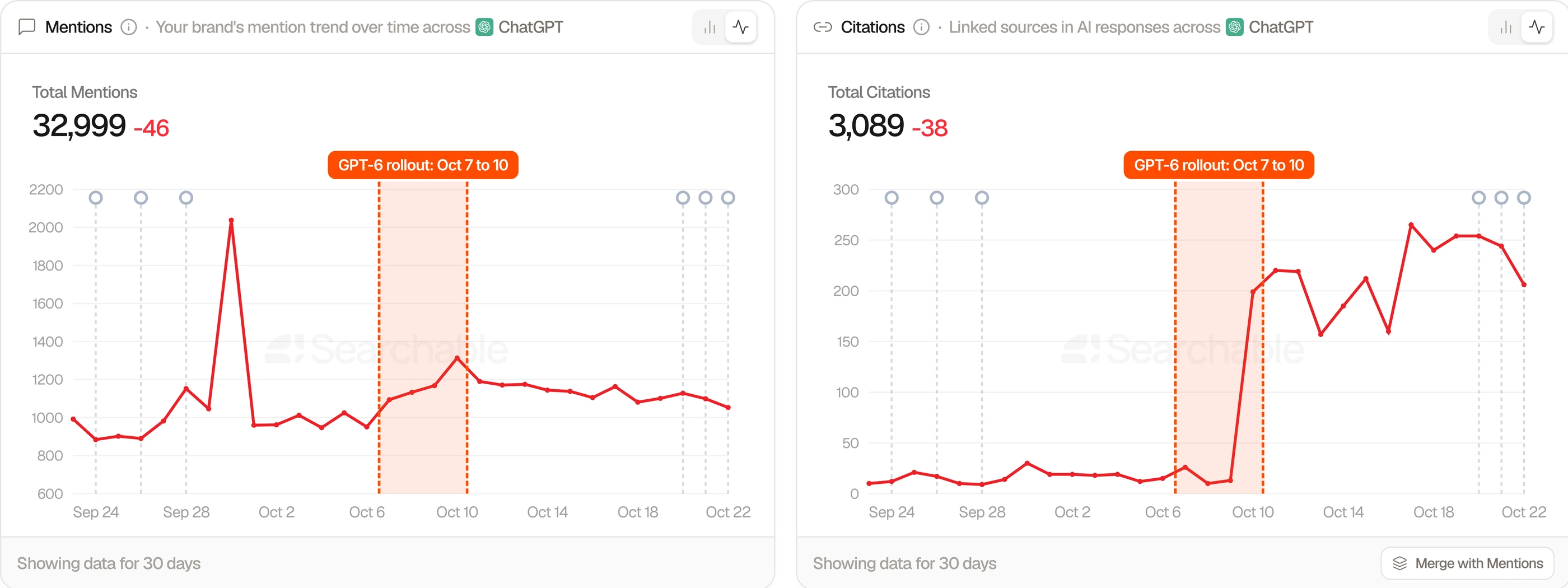
This is ChatGPT's second big shift in two months, after the August change in how much research ChatGPT shows for each answer, so it's worth checking your trend lines for a break like this after every major ChatGPT release.
2. Track mention rate instead of answer length
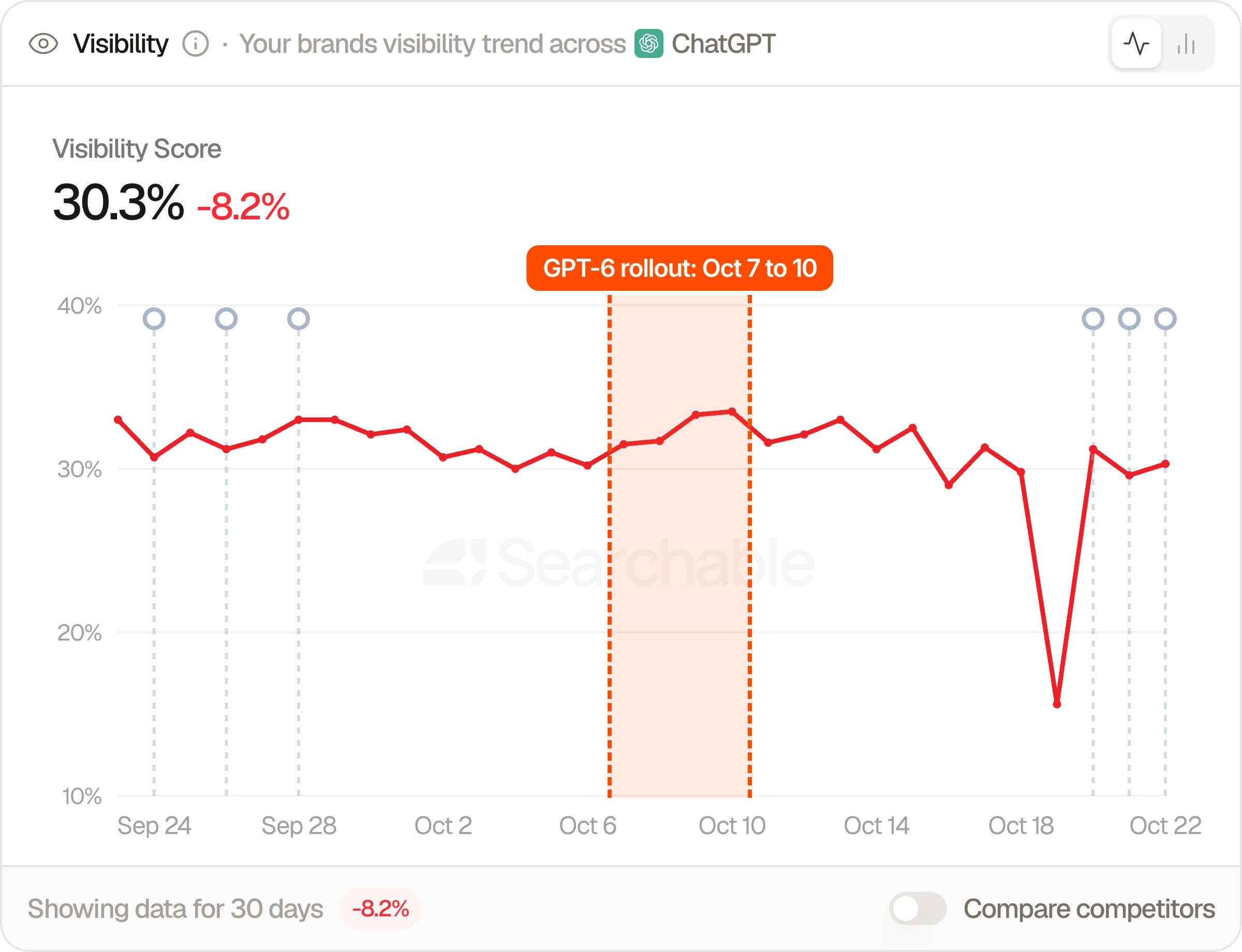
Mention rate is the share of answers that mention your brand. After GPT-6, answer length rose about 40% while the number of brands per answer stayed flat, so a longer answer tells you very little about your visibility. If you don't measure mention rate yet, this guide shows how to track your brand mentions in ChatGPT.
3. Read a sample of your own GPT-6 answers
Pick 10 prompts you care about and read the current answers. Note whether your brand appears in a heading, a table row, or the running text, and which competitors sit next to it. Mention rate tells you whether you're in the answer, while reading a handful of answers shows how ChatGPT presents you next to your competitors.
These results cover the first two weeks of GPT-6 in ChatGPT's Chat tab. OpenAI often adjusts a model after launch, so we plan to re-run this comparison and update the numbers if they move.
Check your brand's ChatGPT mentions after GPT-6
The quickest way to see whether GPT-6 changed anything for your brand is to look at your own prompts. Searchable's free visibility report shows the ChatGPT prompts where competitors are mentioned and your brand isn't, and it doesn't need a credit card.
See where your brand stands in ChatGPT
Get the prompts where competitors are mentioned and your brand isn't. Free report, no credit card required.
How we measured the GPT-6 change in ChatGPT answers
We compared ChatGPT's answers to 24,995 identical prompts from 2,227 brands, collected October 1 to 5 and October 11 to 13, 2026, and skipped the days around the switch to GPT-6. We measured length in words, counted headings and tables, and checked brand mentions.
Data. The answers come from prompts that brands track in Searchable, which runs each prompt in ChatGPT and stores the answer.
Same prompts. We only compared prompts that ran in both periods with the same wording, so a change in which prompts were tracked can't show up as a change in the answers.

