
ChatGPT Ads Intelligence for brands and businesses
Searchable's ChatGPT Ads Intelligence tracks where sponsored placements are appearing, how they impact AI answer visibility, and models the competitive cost pressure brands should expect as ads roll out.
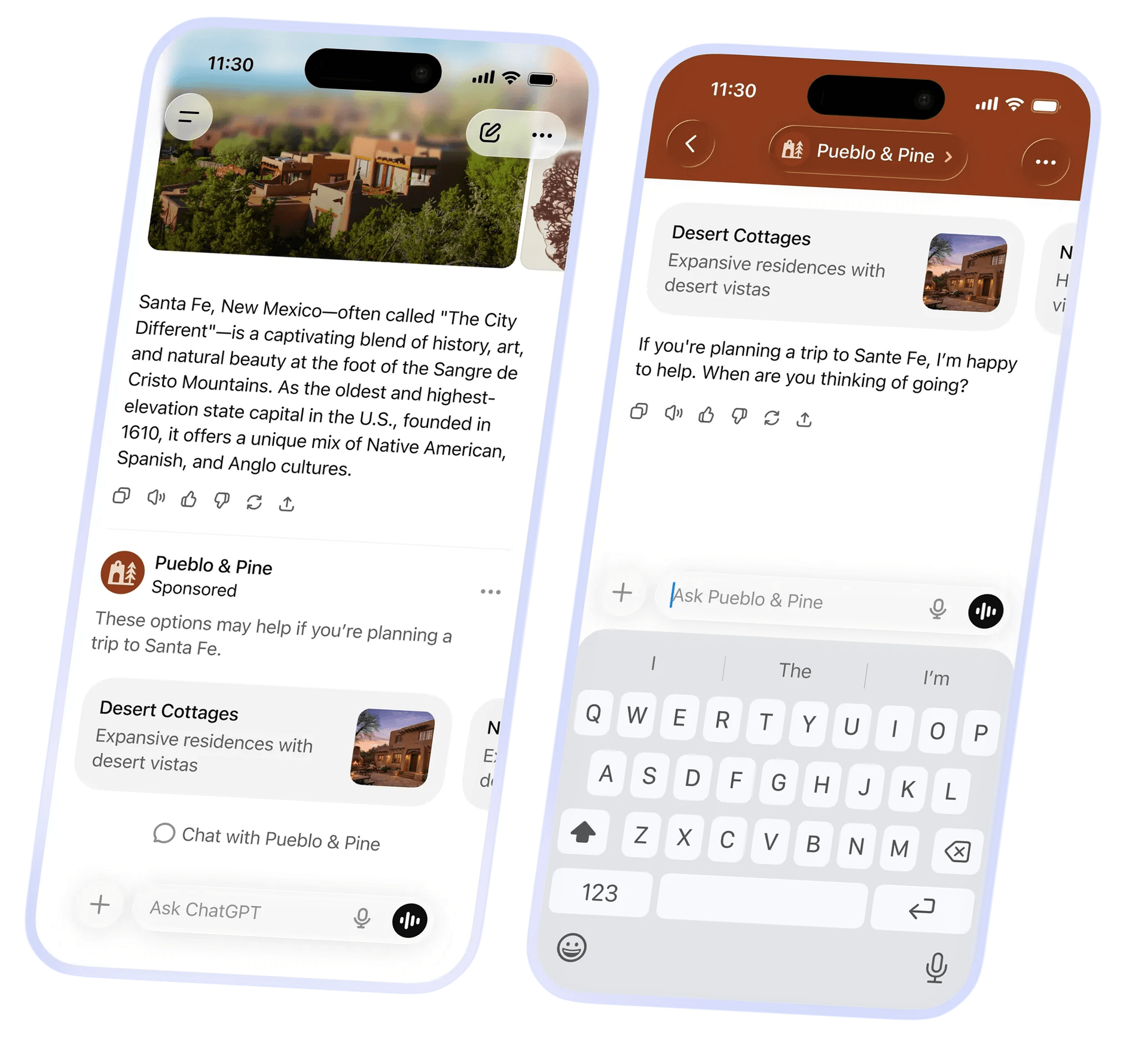





ChatGPT ads introduce a new visibility layer.
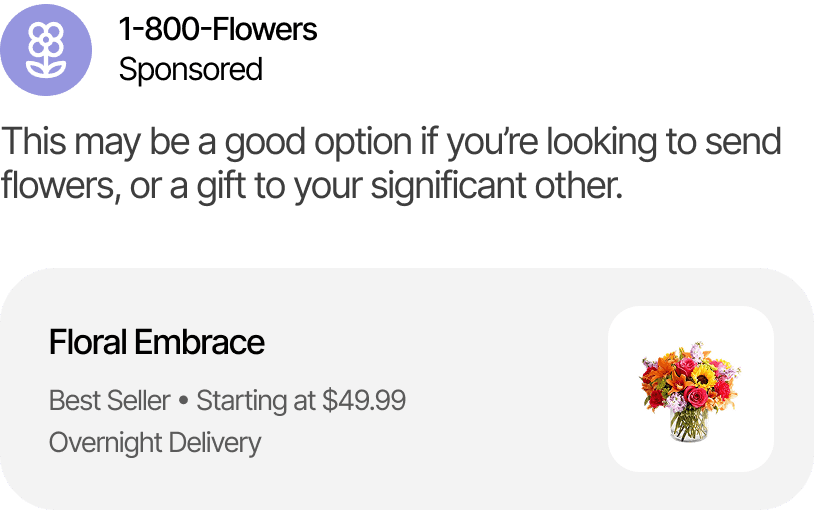
ChatGPT ads are sponsored placements embedded directly into AI-generated answers.
They do not appear as banners or links. Instead, they surface as recommendations, comparisons, or suggested tools inside the response itself.
This introduces a new category of AI search ads that target explicit intent—not inferred from browsing behavior, but stated directly in the prompt. Brands compete for answer real estate, not clicks on a results page.
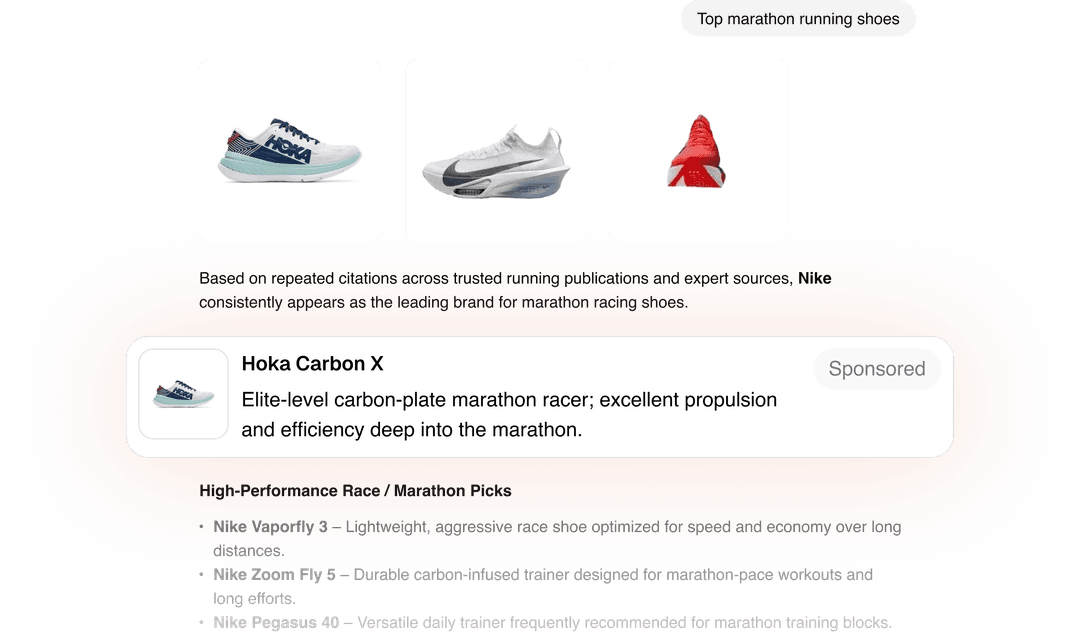
Visibility inside ChatGPT is no longer binary. Answers can now include both sponsored and organic content.
What we know as of February 2026.
OpenAI has not publicly shared full details, but various news sources have reported:
- No advertiser tooling or dashboards — all ads run via OpenAI internal team
- No APIs or programmatic access
- $60 CPM pricing (3x Meta, similar to Netflix launch)
- Only basic reporting: impressions and clicks
- No audience data shared with advertisers
- $200k minimum commitment
This ambiguity matters. OpenAI is balancing privacy promises with advertising requirements. The monetization surface is not yet locked.
ChatGPT ads are rolling out in phases.
ChatGPT ads are rolling out gradually.
Not every user sees ads. Not every prompt is monetized. Availability varies by prompt intent, region, and rollout cohort. Catching them manually is nearly impossible.
The most important signal is not whether ads are fully live, but where they appear first and how answers change when they do.
Searchable monitors these early changes as ChatGPT advertising expands.
Where sponsored placements appear first.
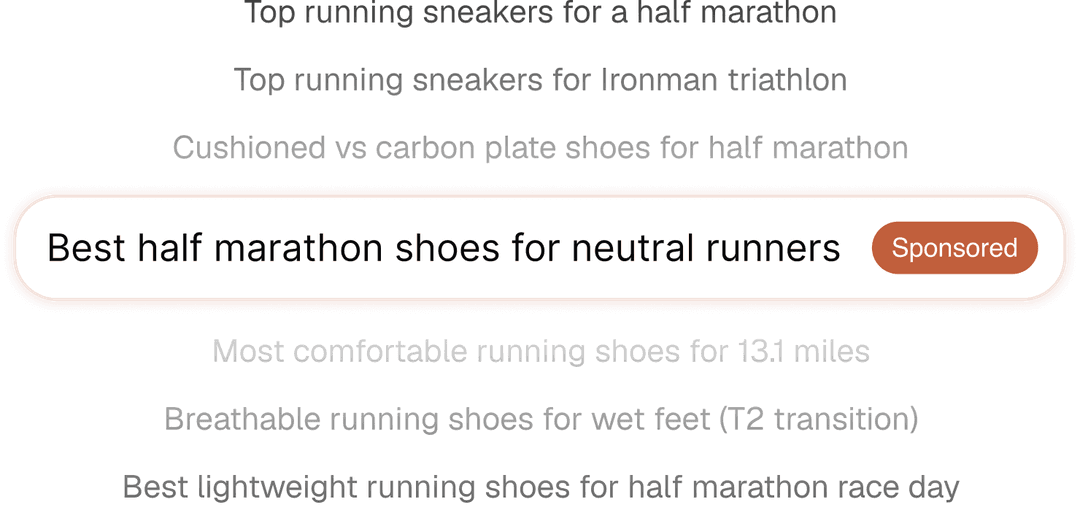
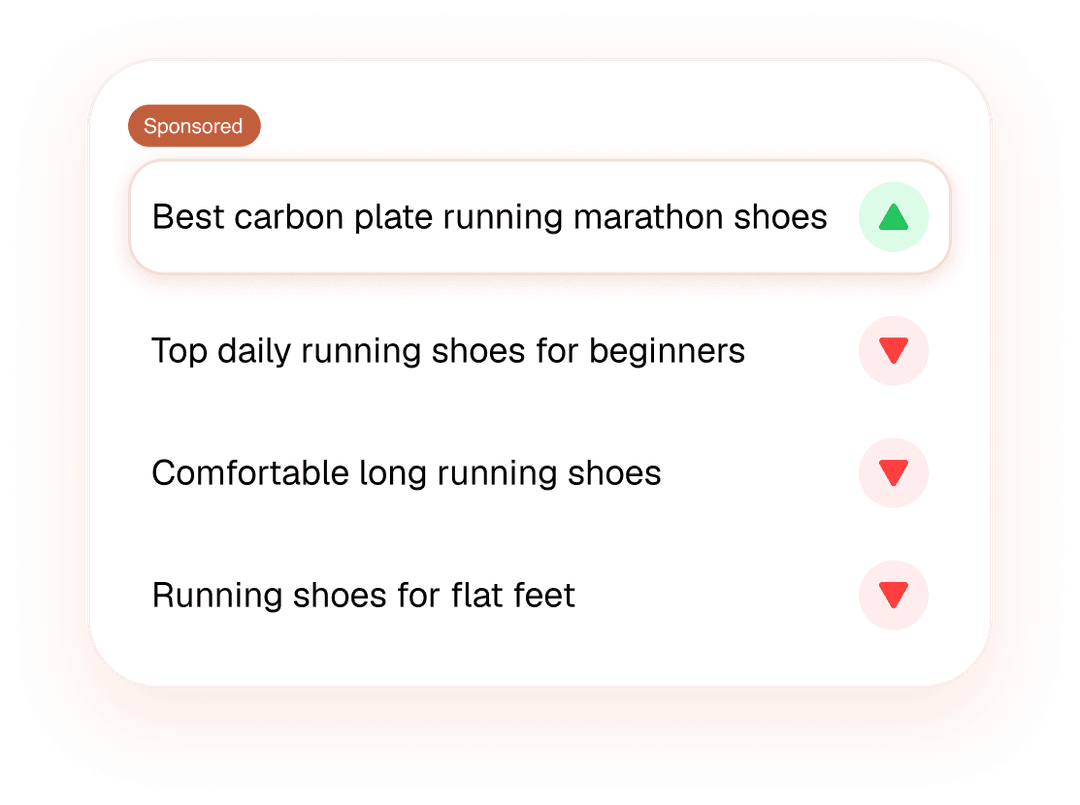
Sponsored placements surface first on high-intent prompts—comparisons, recommendations, and buying queries that produce short, list-based answers.
Searchable tracks these prompts directly and models how competitive each one is becoming as ads roll out—who is competing and what creative they use.
Starting early gives you a data advantage when ads appear in your niche.

“The shift from monitoring to execution is everything. We went from spending hours analyzing AI visibility gaps to having the platform automatically identify problems and generate solutions in minutes.”
Jonathan Kvarfordt, VP of Marketing

“The shift from monitoring to execution is everything. We went from spending hours analyzing AI visibility gaps to having the platform automatically identify problems and generate solutions in minutes.”
Jonathan Kvarfordt, VP of Marketing
1mind's favorite features
Sponsored vs organic AI visibility.
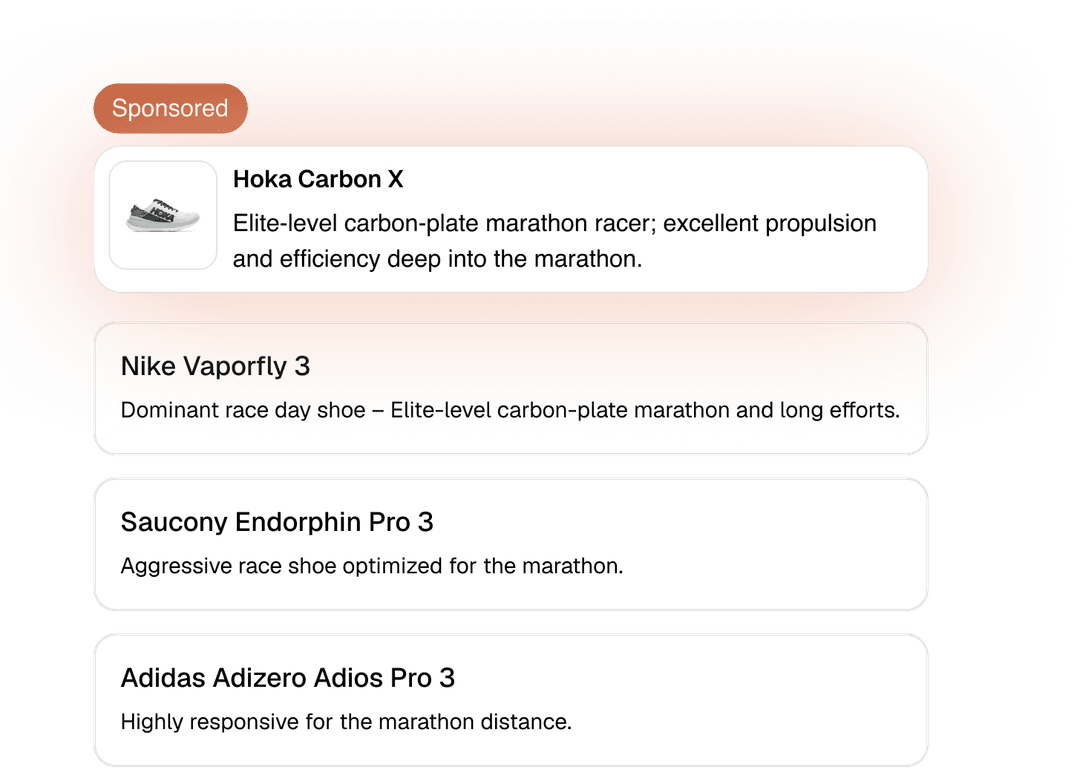
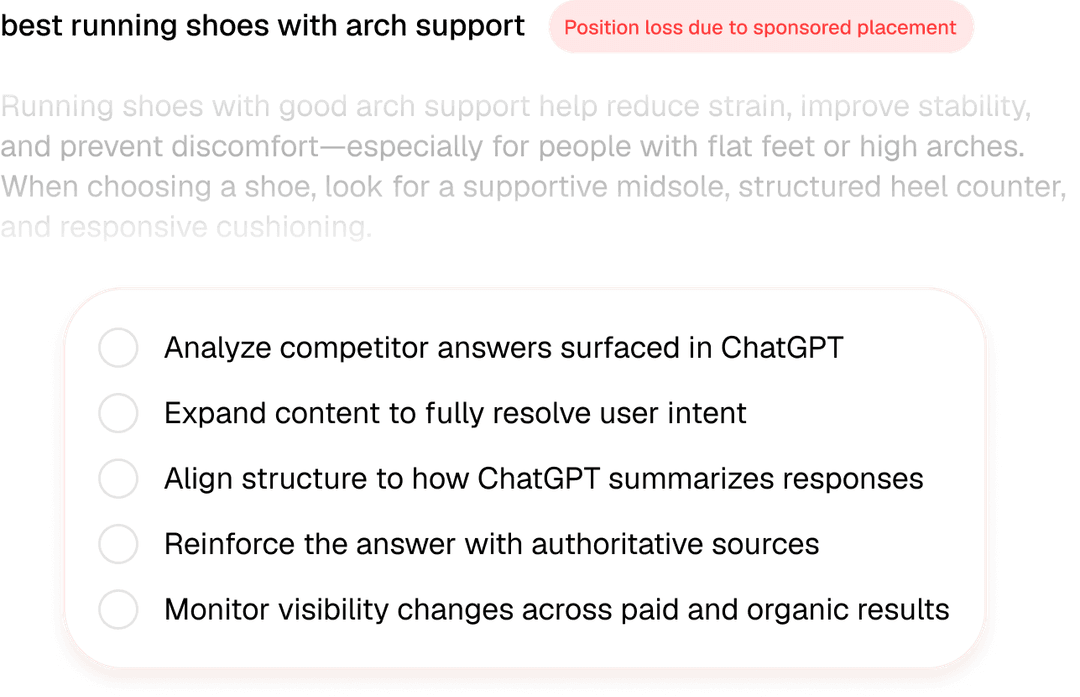
The primary impact of ChatGPT ads is not cost per click—it's answer displacement. When sponsored placements appear:
- Organic brand mentions can move lower in the answer
- Competitors can be introduced into previously stable responses
- Answer depth can be reduced
- Citation patterns can change
But just like organic vs paid search, a hybrid strategy is key. ChatGPT ads can also be used to:
- Show up for answers where you're weak organically
- Expand the conversation for queries about your brand
- Appear in competitors' branded conversations
Whatever your strategy, you need to understand who's advertising, how often they appear, and how competitive the space is becoming.
How ChatGPT ads affect SEO and organic visibility.
ChatGPT ads do not replace SEO, but they change how SEO translates into visibility.
Strong rankings do not guarantee continued inclusion in AI answers once sponsored placements dominate high-intent prompts.
ChatGPT ads vs organic visibility is no longer theoretical. It is observable at the prompt level.
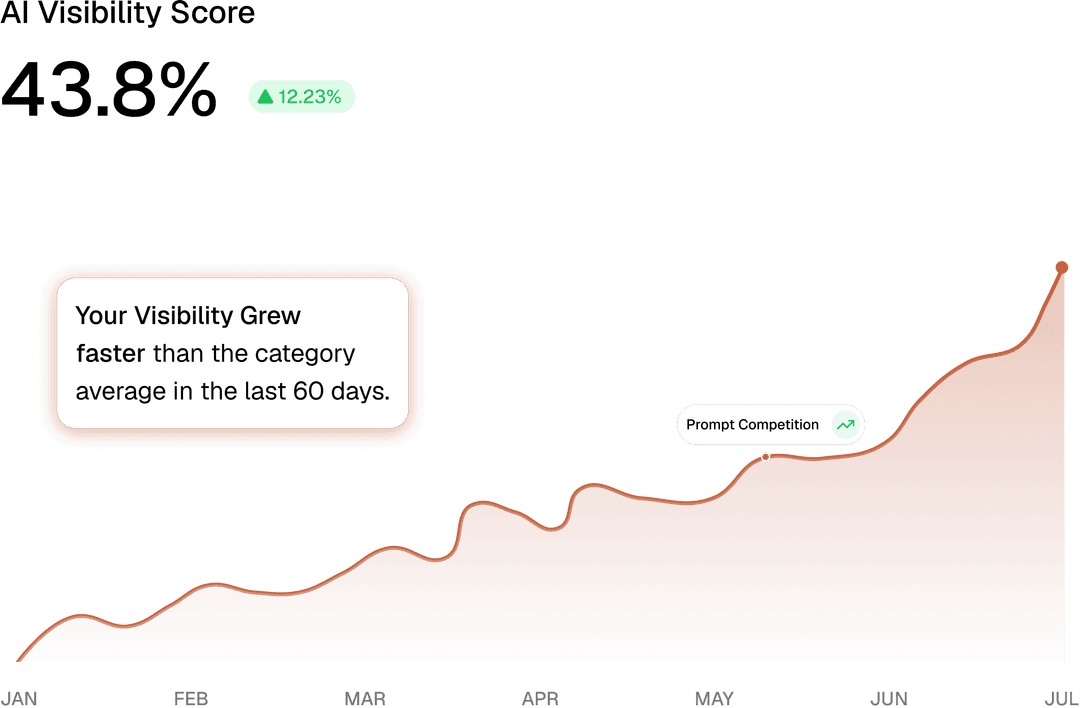
Searchable helps teams understand where organic AI visibility is being displaced, where it remains defensible, and how visibility evolves as advertising scales.
Measuring competitive pressure and cost impact.
ChatGPT does not expose bidder identities, auctions, or live CPCs.
However, competitive pressure is still measurable.
Searchable estimates the cost pressure brands should expect by modeling prompt-level competition using observable signals:
- Commercial intent
- Brand density
- Sponsored placement frequency
- Answer volatility
- Demand indicators
This allows teams to anticipate rising competition before costs spike or visibility declines.
How Searchable tracks ChatGPT ads.
Searchable is not an ad platform.
We do not sell placements and we do not claim access to auction data that is not publicly available.
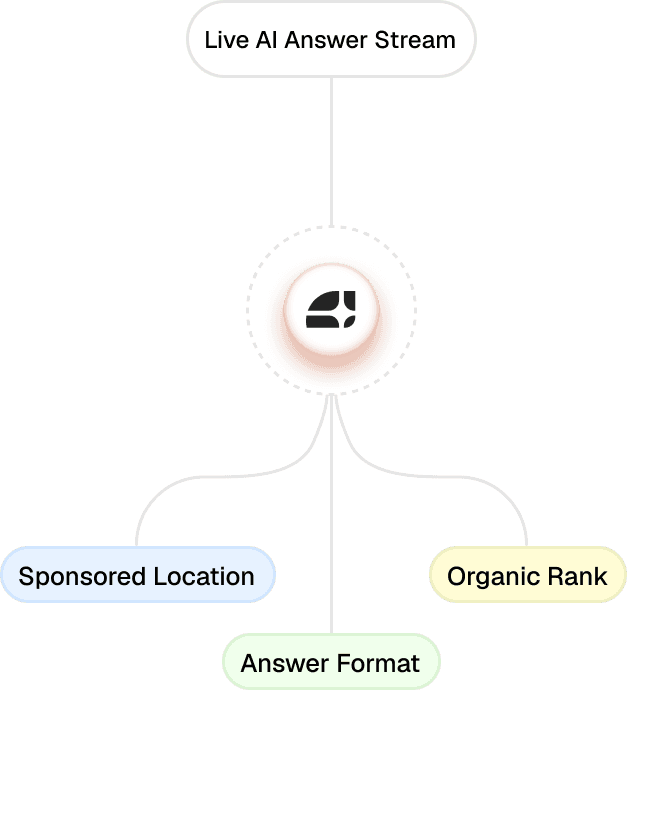
Searchable acts as the AI visibility measurement layer for ChatGPT ads, tracking:
- Where sponsored placements appear inside AI answers
- How answer structure changes over time
- When organic brand mentions are displaced or compressed
- Which prompts are becoming competitive as advertising expands
This brings sponsored and organic AI visibility into a single system.
Get early access to ChatGPT Ads Intelligence
Track where sponsored placements appear, measure visibility impact, and model competitive pressure before costs spike.
Acting on ChatGPT ads data.
ChatGPT Ads Intelligence is designed to support decisions, not just reporting.
Searchable helps teams:
- Identify prompts that require paid defense
- Recognize where organic visibility still performs
- Prioritize which answers matter most
- Respond to visibility changes before performance drops
This allows teams to act early instead of reacting after visibility is lost.
Creating ads for ChatGPT.
ChatGPT ad copy is not the same as traditional search ad copy.
Effective sponsored AI answers:
- Match the model's tone
- Avoid aggressive calls to action
- Provide genuine informational value
- Feel native to the answer experience
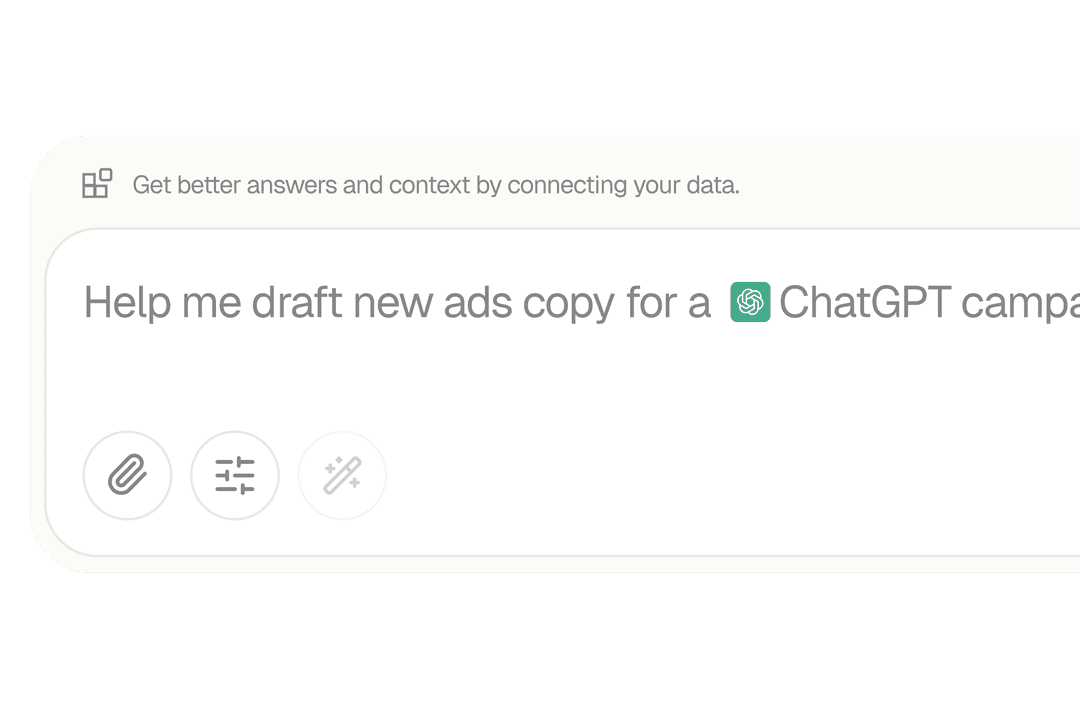
Searchable includes tools for creating native ChatGPT ad copy designed specifically for AI answer environments.
Frequently asked questions.
Track ChatGPT ads with clarity
Get early access to ChatGPT Ads Intelligence
Some metrics are modeled estimates based on observed placement behavior and competitive signals, not live auction data.