

Intro
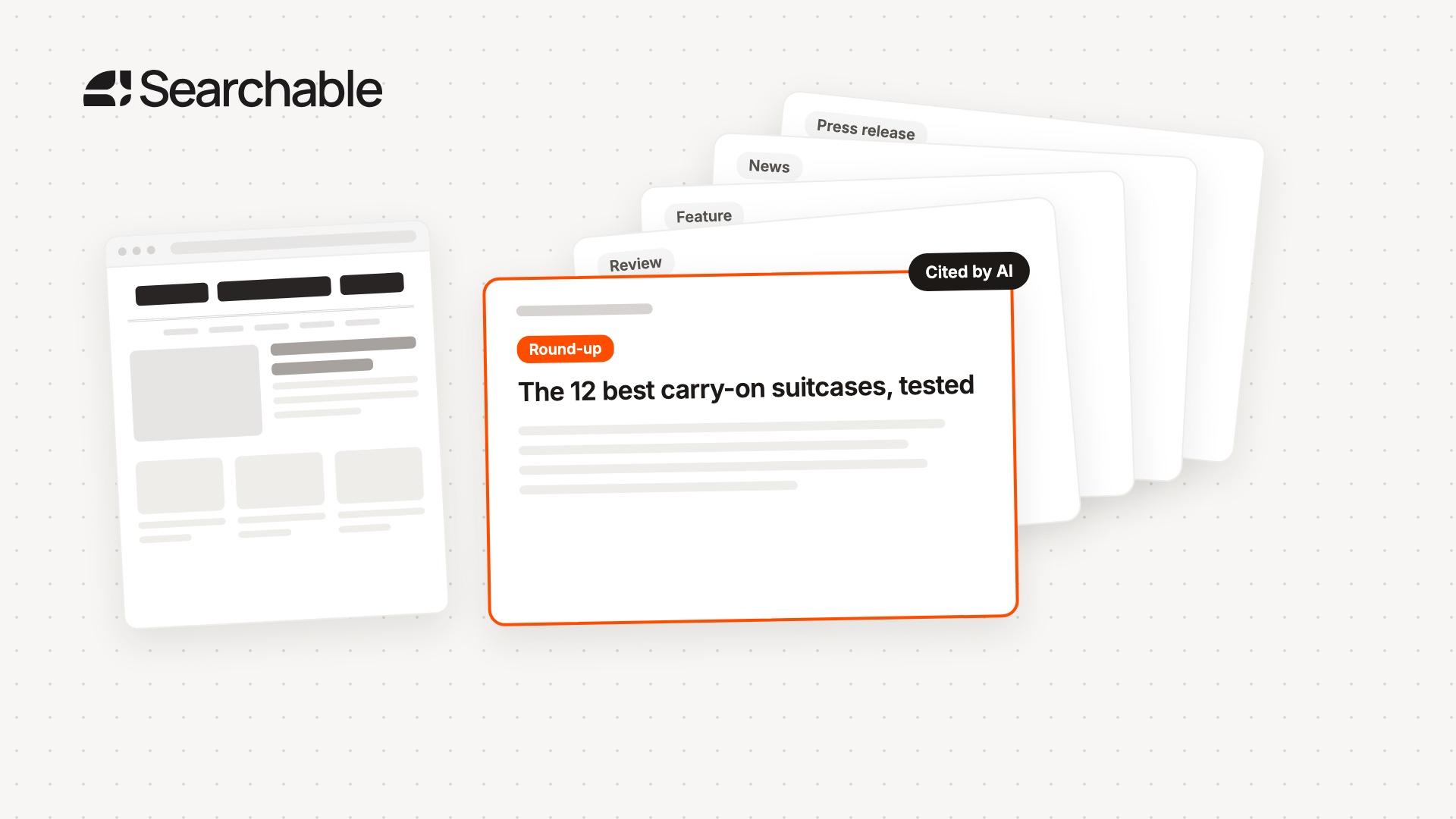
Nearly two-thirds (65%) of the press pages AI engines cite for consumer brands are round-ups and rankings such as "best of" lists, buying guides and gift guides, based on our analysis of over 600,000 answers to non-branded questions.
That matters for PR because these pieces aren't equally easy to win. A place in a ranking takes different work to a news story or a review, and which one pays off in AI search depends on the sector.
We sorted the press pages AI engines cited in answers to non-branded questions, the ones that don't name a brand, from July to October 2026. Each page was labeled by the type of press coverage it is, and the results broken down across 17 sectors.
Key findings
- Round-ups and rankings lead: 65% of the press pages AI cites are "best of" lists, buying guides and gift guides.
- Shopping sectors lean on them most: round-ups and rankings make up 69% to 96% of the press cited in fashion, beauty, electronics and five other shopping sectors.
- Hospitality is different: round-ups and rankings are 47% to 64% of the press cited in hospitality and travel. Individual reviews also make up 17% of the press AI cites on restaurant questions and 20% on hotel questions.
- Finance follows the shopping pattern: round-ups and rankings are 74% of the press AI cites on finance questions, from "best" lists of products like credit cards and savings accounts.
- Electronics and beauty questions draw the most press: press is 19.5% and 18.3% of all the pages AI cites in those sectors, against an average of 10.4% across sectors.
- Press releases barely register: they are 2% of the press pages AI cites.
- Small sites' rankings match big ones question for question: on average across engines, AI cites a round-up or ranking on a site with under 1,000 monthly organic visits about as often as one on a site with 100,000 or more, for the same question.
- ChatGPT and Google's AI Overviews split on site size: for the same question, AI Overviews cites a ranking page on a high-traffic site 15% more often, and ChatGPT cites one on a low-traffic site 22% more often.
- Cited rankings turn over within months: only around one in nine (11.1%) of the round-ups ChatGPT and Perplexity cited on a buying question in early August were still cited for it at the end of October.
Table of Contents
Which types of media coverage AI cites
On average across these 17 sectors, media coverage is 1 in 10 of the pages AI cites when it answers questions in a consumer brand's category (10.4%). Across all the press pages AI cites for consumer brands, nearly two-thirds (65%) are round-ups and rankings.
Share of the media coverage AI cites, by type
Each type as a share of all the press pages AI cites for consumer brands, July to October 2026.

Those are the "best of" lists, buying guides and gift guides published by the biggest titles on the web, such as Wirecutter at The New York Times, Good Housekeeping and Forbes. Everything else adds up to the remaining 35%.
Advice and explainers come next at 11%, answering a how-to or what-is question, with WebMD and Healthline supplying many of them on health questions. News stories make up 8% and reviews of a single product, hotel or restaurant 7%. Features and interviews are 6%.
Press releases barely register at 2%, and many of those reach AI through wire services such as PR Newswire and Business Wire. Newsletters, such as posts on Substack, make up 0.2%.
How much of what AI cites is press, by sector
Electronics and beauty questions draw the most press, at 19.5% and 18.3% of all the pages AI cites in those sectors, against an average of 10.4% across these sectors. Between 79% and 84% of those press pages are "best of" round-ups and rankings, in titles such as TechRadar and Wirecutter for electronics and Allure and Cosmopolitan for beauty.
Share of the pages AI cites that are media coverage, by sector
Media coverage as a share of every page AI cites on questions in each sector, July to October 2026. The average across these sectors in a lighter shade.
A brand's own site and its rivals' sites make up under three in ten of the pages AI cites in beauty and electronics, against 51% in fitness and 52% in motoring, so the press in electronics and beauty takes room that brand websites fill elsewhere.
Hotels and tours draw less press, at 6.0% and 3.8% of the pages cited. AI answers there lean on the businesses' own websites and their rivals', which are just over four in ten of the pages cited on hotel questions and nearly half on tours. Tripadvisor and Booking.com are among the other sites AI cites most for hotels.
Restaurants and bars are the exception, at 8.0%, the most of any travel or hospitality sector, with food titles such as the Michelin Guide, Eater and The Infatuation among the press AI cites.
Which types of media coverage AI cites, by sector
In most shopping sectors, round-ups and rankings are between 69% and 96% of the press AI cites, peaking at 96% for flowers and gifts with headlines such as Forbes Vetted's "Best Flower Delivery Services 2026". Food and drink sits lower at 74%, though its lists still lead, such as Wired's best protein bars.
Motoring is the exception among product sectors. Round-ups and rankings such as Car and Driver's best luxury SUVs make up 58% of the press cited, closer to hospitality, with advice (15%) and news (14%) making up much of the rest.
Share of the media coverage AI cites that is round-ups and rankings, by sector
Round-ups and rankings as a share of the press pages AI cites on questions in each sector, July to October 2026.
Finance round-ups cover a broad range of products, from high-yield savings accounts in CNBC Select to personal loans in Forbes Advisor, and make up 74% of the press cited. Advice and explainers that help with borrowing decisions, such as CNBC Select's guide to whether a personal loan is a good idea, add 9%.
Round-ups and rankings fall to 55% for hotels and 47% for attractions and experiences.
Beyond round-ups and rankings, what other press gets cited?
Where round-ups and rankings give way, each sector leans on a different kind of piece. Reviews are 17% of the press AI cites on restaurant questions and 20% on hotel questions. Features and interviews are 16% for venues and events. Attractions spread more evenly across news, features and advice, which is highest at 18%.
Reviews, features, news and advice in the press AI cites, by sector
Each type as a share of the press pages AI cites on questions in each sector, July to October 2026. Round-ups and rankings make up the rest. Sectors run from the most of these types to the least. Darker means a bigger share.
| Reviews | Features and interviews | News stories | Advice and explainers | Press releases | |
|---|---|---|---|---|---|
| Attractions and experiences | 2% | 14% | 16% | 18% | 1% |
| Hotels | 20% | 12% | 8% | 4% | 1% |
| Restaurants and bars | 17% | 16% | 9% | 1% | 2% |
| Motoring | 11% | 0% | 14% | 15% | 1% |
| Tours and travel | 4% | 14% | 11% | 4% | 3% |
| Venues and events | 6% | 16% | 7% | 3% | 4% |
| Health and wellness | 3% | 3% | 1% | 22% | 2% |
| Food and drink | 3% | 6% | 8% | 8% | 1% |
| Finance | 1% | 0% | 9% | 9% | 3% |
| Beauty | 5% | 3% | 5% | 6% | 2% |
| Sport and outdoors | 9% | 1% | 4% | 4% | 0% |
| Electronics | 2% | 2% | 8% | 4% | 0% |
| Home and furniture | 3% | 1% | 2% | 5% | 4% |
| Baby and kids | 1% | 0% | 7% | 2% | 0% |
| Fashion | 1% | 2% | 1% | 2% | 1% |
| Flowers and gifts | 0% | 2% | 0% | 1% | 0% |
Hotel reviews come from titles such as Condé Nast Traveler and Travel + Leisure, and restaurant reviews from the Michelin Guide above all. For venues and events, the features include trade pieces for event planners in titles such as Meetings Today.
The advice pieces cited for attractions are mostly trip-planning guides to a city, such as Travel + Leisure's travel guides and The New York Times' 36 Hours column. Only health and wellness draws more advice, at 22% of its press against 11% across all press, much of it from WebMD and Healthline.
The publications AI cites most for consumer brands
Forbes is the publication AI cites most for the average consumer brand, at 4.2% of the press cited. Just over six in ten (62%) of those citations are its shopping guides.
The publications AI cites most for consumer brands, and the sections of their sites it cites
Each publication's share of the press AI cites for the average consumer brand, and how those citations split across types of section on its site, July to October 2026.
 4.2%
 2.5%
 The New York Times2.1%
 1.7%
 1.7%
 1.5%
 1.4%
 Michelin Guide1.3%
Product reviews and guides, from Wirecutter, are 92% of what AI cites from The New York Times. Condé Nast Traveler is mostly best-of lists and hotel reviews, and Time Out almost entirely city pages.
What gets a round-up or ranking cited in AI answers?
This section covers "best of" lists and buying guides on any editorial or comparison site, not only press titles.
Sites with under 1,000 monthly organic visits, including small comparison and testing sites such as Testix and The Tested Hub, hold 36% of the round-ups and rankings AI engines cite on buying questions and get 29% of the citations. Titles with 100,000 or more, such as Condé Nast Traveler, Forbes and The Wall Street Journal, hold 41% and get 48%. Mid-traffic titles such as Observer and Haute Living hold 23% and get 23%.
Share of the round-ups and rankings AI cites, and of their citations, by organic traffic
"Best of" lists and buying guides AI engines cited on buying questions, grouped by the monthly organic traffic of the site they sit on, September and October 2026.
High-traffic sites get 100,000 or more organic visits a month, mid-traffic sites 1,000 to 99,999 and low-traffic sites under 1,000.
The gap comes from reach. A ranking on a high-traffic site such as Good Housekeeping is cited in answers to 2.8 different questions on average, counting each AI engine separately, against 1.9 for a ranking on a low-traffic site such as Testix. That is why big titles' rankings get 1.5 times as many citations overall. Averaged across engines, AI cites the two at about the same rate when they answer the same question.
Number of questions each round-up or ranking is cited for, by organic traffic
Average number of different buying questions each ranking was cited for, counting each AI engine separately, September and October 2026.
High-traffic sites get 100,000 or more organic visits a month, mid-traffic sites 1,000 to 99,999 and low-traffic sites under 1,000.
Engines do lean one way or the other. For the same question, Google's AI Overviews cites a ranking page on a high-traffic site such as Forbes 15% more often than one on a low-traffic site. ChatGPT goes the other way and cites a ranking page on a low-traffic site 22% more often. Perplexity, AI Mode and Gemini show no clear lean.
How much more often each AI engine cites a ranking on a high- or low-traffic site, for the same question
How much more often each engine cited a ranking page on a high-traffic site than one on a low-traffic site, or the other way round, when both answered the same buying question, September and October 2026. Engines in grey showed no clear lean either way.
High-traffic sites get 100,000 or more organic visits a month, mid-traffic sites 1,000 to 99,999 and low-traffic sites under 1,000.
A place in a ranking also doesn't keep its citations for long. Only around one in nine (11.1%) of the round-ups and rankings ChatGPT and Perplexity cited on a buying question in early August were still cited for that same question at the end of October.
Perplexity holds on to them longest. Nearly a third (31%) of the lists it starts citing on a question are still cited for it three weeks later, and around one in eight (13%) after ten weeks. ChatGPT and AI Overviews move on faster, still citing 14% and 9% of them a week later.
How long AI keeps citing a round-up or ranking on the same question, by engine
Share of round-ups and rankings still cited by the same engine for the same question, by weeks since it first cited them, in %. Lists first cited in August 2026, followed to the end of October. Darker means more of them still cited.
For PR teams, that means the rankings AI cites for holiday shopping questions are still being decided, and a place won in a list over the summer may no longer be cited by the holidays.
See which media coverage AI cites in your category
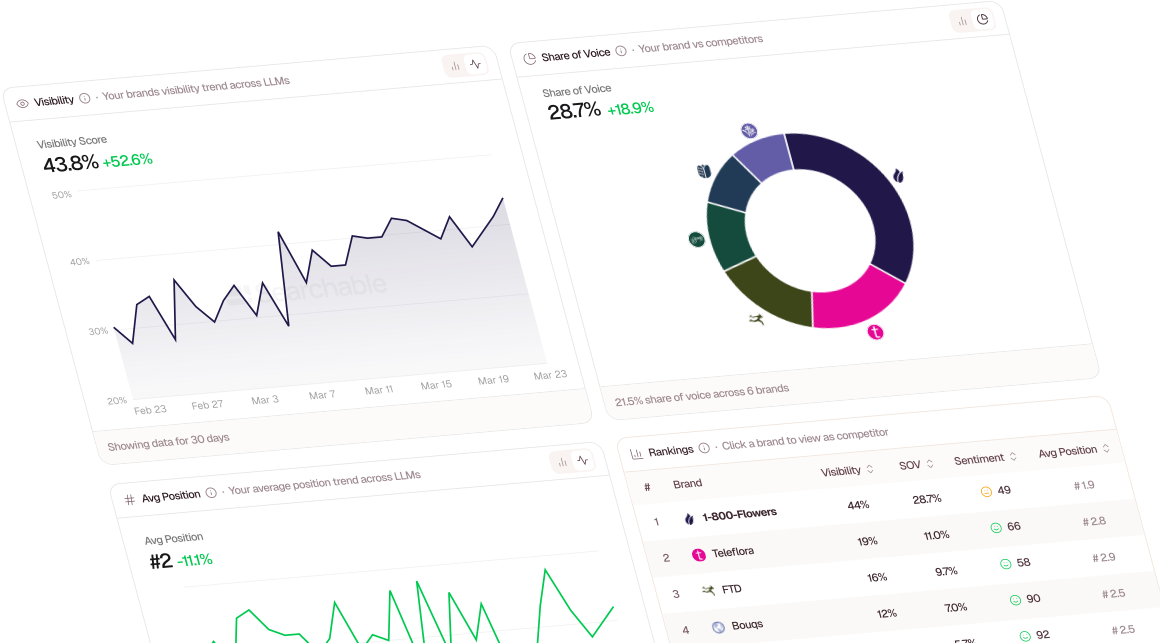
Searchable shows the pages AI engines use when your customers ask about your category, from the round-ups, rankings and reviews that name you to the ones that name your competitors.
- See which round-ups, rankings and reviews AI cites for your customers’ questions
- Find the press coverage AI uses in your category
- Track your brand across every major AI engine
Want to chat with an expert? Book a demo
Trusted by over 2,000 marketing professionals and agencies.
Does PR help AI visibility?
Yes, though not in one simple way. Getting into the news does not guarantee a place in AI answers. PR helps through several routes, and the one you can count is AI citations, the links and sources credited within the answers AI engines give.
Across the 17 consumer sectors here, media coverage is on average 1 in 10 of the pages AI engines cite on non-branded questions. Most of it is round-ups and rankings, so in shopping sectors the coverage that turns into citations is mostly a place in "best of" lists and buying guides. For hotels and restaurants, reviews do more of the work, though rankings still make up most of what is cited.
Other routes are harder to measure. Coverage that describes a brand the same way across outlets can shape how AI engines describe it too, and consistent, accurate naming helps counter AI misrepresenting a brand, which at least two-thirds of brands that check their facts run into.
Relevant, authoritative links from that coverage help pages rank in the search results many engines draw on. And coverage that people remember makes them more likely to ask an AI about the brand by name later.
Brand awareness also works more directly in AI search. People can now be more specific than ever about what they want to buy with AI search engines, so when PR helps a brand become the answer, the user behavior data we record at Searchable shows that people are likely to go straight to that brand's website.
How does this differ from Muck Rack's What Is AI Reading? report?
Muck Rack's What Is AI Reading? report covers every kind of question people ask AI, from how-to and industry-trend questions to product recommendations, across four AI engines. It finds that earned media makes up 84% of the links AI cites and journalism 22%, and that nearly half of the journalism AI cites is breaking or recent news.
This analysis looks only at the non-branded questions people ask about a consumer brand's category, where AI is usually asked to recommend something. On those questions, round-ups and rankings are 65% of the press AI cites and news stories 8%.
The two point the same way. Muck Rack's own breakdown by type of question puts breaking or recent news at 2% of citations on best-of questions, against 18% on industry-trend questions. AI cites news when people ask what is happening in an industry, and round-ups and rankings when they ask what to buy.
Press here is also wider than journalism, and includes consumer testing publishers such as Which? and trade publications.
Methodology
We analyzed over 4.1 million citations that ChatGPT, Google AI Overviews, Google AI Mode, Gemini, Perplexity, Microsoft Copilot and Grok gave in their answers from July to October 2026, across the non-branded questions Searchable customers track for consumer brands, in answers where the brand was mentioned. Each question was assigned to the sector it asks about, and we averaged across brands so no single brand outweighs the rest. We classified over 27,000 websites by the type of site they are, then over 33,000 press pages on them by the type of piece.
We count as press any page on a national or regional news site, consumer magazine or special-interest title, consumer testing publisher such as Which? or Consumer Reports, trade publication, broadcaster, journalist newsletter or press release wire, including their buying guides and commerce desks. Comparison and affiliate sites, review platforms, blogs and social media are not counted as press.
For round-ups and rankings, we compared the "best of" lists and buying guides AI engines cited on the same buying question on the same engine in September and October 2026, and grouped the sites they sit on by their monthly organic traffic, as estimated by Ahrefs. Those shares are taken across all the rankings cited rather than averaged by brand.
For how long rankings stay cited, we followed each "best" or "top" list from the week an engine first cited it on a question, in August 2026, to the end of October, and counted the weeks the same engine still cited it whenever that question was run, averaged across brands. The early August to late October comparison takes the lists cited on each question in the week of August 3 and checks the week of October 26.